

The upper arms can sometimes retain pockets of stubborn fat even when a person follows a healthy diet and exercises regularly. Genetics, aging, changes in body weight and individual fat distribution can all contribute to fullness in the arms. When localized fat is the main concern and the skin still has reasonable elasticity, arm liposuction may offer a way to improve the shape and proportion of the upper arms.
Arm liposuction is a body contouring procedure that removes unwanted fat from targeted areas of the upper arm. It is not designed as a weight loss treatment. Instead, the goal is to create a smoother and more defined arm contour while maintaining natural proportions.
Understanding what arm liposuction can and cannot achieve is important before considering the procedure. Skin quality, the amount of excess fat, overall health and personal expectations all influence whether liposuction is an appropriate choice.
What Is Arm Liposuction?
Arm liposuction is a surgical procedure that removes localized deposits of fat from the upper arms using a small cannula and controlled suction. During the procedure, the surgeon makes small incisions in carefully selected areas and guides the cannula through the fatty tissue. The goal is to remove unwanted fat evenly rather than simply removing as much tissue as possible.
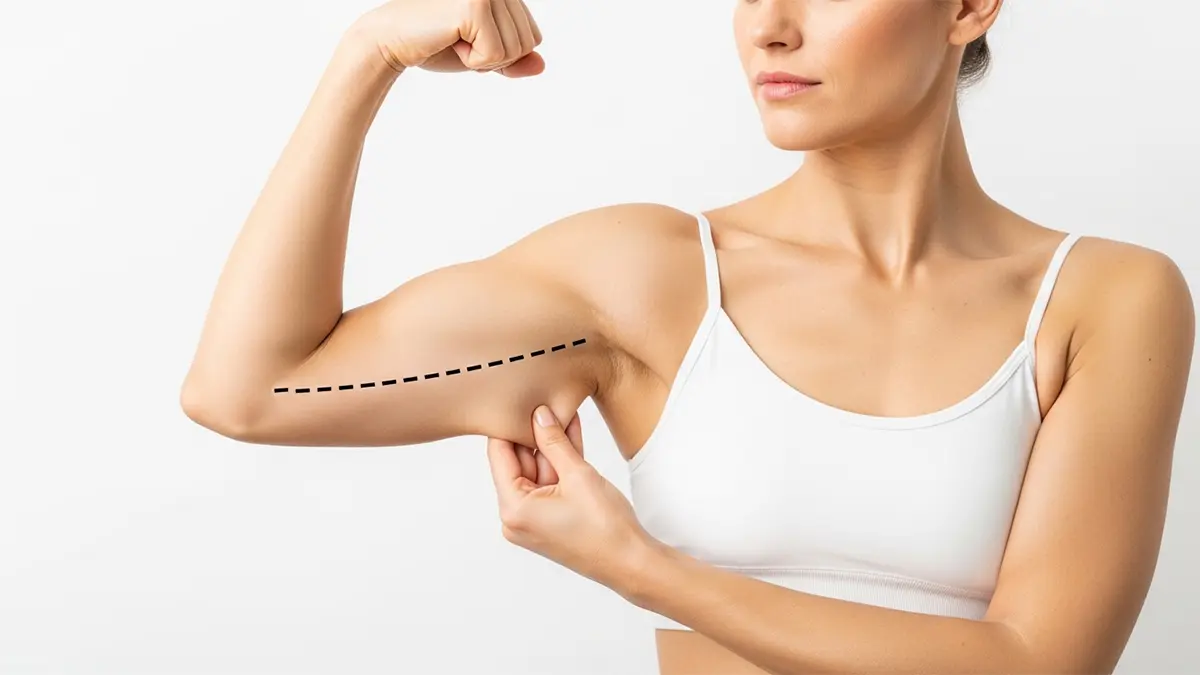
The upper arms are an area where careful contouring is particularly important. Removing too much fat or creating uneven transitions can result in irregularities. The surgeon therefore considers the shape of both arms and the relationship between the arms, shoulders and upper body. Liposuction can be performed on the upper arms when excess fat is the primary concern and the skin has sufficient elasticity to adapt to the new contour.
What Areas Can Arm Liposuction Treat?
Arm liposuction generally focuses on localized fat around the upper arms. Depending on the individual’s anatomy, treatment may address fullness along the inner or outer portion of the upper arm.
Some patients may also have fullness extending toward the area near the armpit. Whether this area should be treated depends on the overall contour and the amount of available fatty tissue.
The objective is usually to create a smoother transition between the upper arm and surrounding areas rather than producing an extremely thin appearance. Every person’s arm structure is different, so the treatment plan should be based on the patient’s anatomy rather than a standard amount of fat removal.
Who Is a Good Candidate for Arm Liposuction?
Arm liposuction may be suitable for adults who are generally healthy, maintain a relatively stable weight and have localized fat that does not respond sufficiently to diet and exercise. Candidates generally benefit from having reasonably firm and elastic skin. Good skin elasticity allows the skin to adapt more effectively after the underlying fat has been removed.
A consultation may consider:
• Overall health and medical history
• Weight stability
• Skin elasticity
• Amount and location of arm fat
• Previous surgeries
• Smoking status
• Medications and supplements
• Expectations about the final appearance
Realistic expectations are particularly important. Liposuction can improve a specific contour, but it cannot guarantee a particular arm shape.
Can Arm Liposuction Remove Sagging Skin?
This is one of the most important questions patients should ask. Liposuction removes fat, not significant amounts of excess skin. If the skin has good elasticity, it may contract to some degree after fat removal. However, loose or hanging skin cannot generally be corrected by liposuction alone.
This distinction becomes particularly important after significant weight loss. Someone may have both excess arm fat and substantial loose skin. In that situation, removing the fat alone may not create the desired contour. An arm lift, also known as brachioplasty, is a different procedure that removes excess skin and reshapes the upper arm. Liposuction may sometimes be used alongside an arm lift depending on the patient’s individual needs.
Arm Liposuction vs Arm Lift
Although the procedures can sometimes be combined, arm liposuction and an arm lift address different concerns. Arm liposuction primarily targets excess fat. It may be appropriate when the skin is relatively firm and the main concern is fullness. An arm lift addresses excess skin as well as the underlying contour. It may be considered when there is significant skin laxity, particularly after substantial weight loss.
An arm lift requires larger incisions than liposuction and therefore produces more noticeable scars. The incision can extend along the inner or back portion of the arm depending on how much skin needs to be removed. The appropriate procedure depends on whether fat, loose skin or a combination of both is responsible for the appearance of the arms.
How Is Arm Liposuction Performed?
Before surgery, the surgeon assesses the arms and identifies the areas where fat removal can improve the overall contour. Anesthetic medication is administered according to the surgical plan. A solution may then be introduced into the treatment area to prepare the tissue and help reduce bleeding during fat removal.
Small incisions are made, and a cannula is inserted into the fatty tissue. The surgeon moves the cannula through the treatment area using controlled movements to remove fat and shape the arm.
The amount of fat removed depends on the patient’s anatomy and the desired contour. More fat removal does not necessarily mean a better result. Maintaining smooth transitions and avoiding overcorrection are important aspects of the procedure. The incisions are usually small, and their location is planned to make them as discreet as reasonably possible.
What Are the Benefits of Arm Liposuction?
The main purpose of arm liposuction is to improve the contour of the upper arms. Potential benefits can include:
• Reduction of localized arm fat
• A smoother upper arm contour
• Improved proportion between the arms and upper body
• Better definition of the arm shape
• Small incision sites compared with procedures requiring significant skin removal
For someone whose main concern is localized fat rather than loose skin, this can create a noticeable change in the appearance of the arms. However, results vary from person to person. Skin elasticity, fat distribution, body shape and healing all influence the final outcome.
What Are Arm Liposuction Scars Like?
Patients often ask about arm liposuction scars, particularly because the arms are visible areas of the body. Liposuction requires small incisions through which the cannula is inserted. These usually leave small scars rather than the longer scars associated with an arm lift. Cleveland Clinic notes that liposuction generally results in small scars, although scars are still a normal part of surgical healing.
The final appearance of a scar depends on several factors, including genetics, skin type, incision placement, healing and postoperative care. Scars generally become less noticeable as they mature, but they do not necessarily disappear completely. Your surgeon can explain where incisions are likely to be placed and provide guidance on appropriate scar care.
What Is Recovery Like After Arm Liposuction?
Recovery varies according to the amount of fat removed and the extent of treatment. Swelling, bruising, tenderness and temporary changes in sensation can occur during the early healing period. A compression garment may be recommended to help manage swelling and support the treated area.
Some patients can return to work within several days, depending on their occupation and individual recovery. More physically demanding activities and strenuous exercise generally need to be postponed until the surgeon confirms that it is safe to resume them.
It is important not to judge the final result too early. Swelling can temporarily make the arms appear fuller or uneven. As healing progresses, the contours become clearer. Following your surgeon’s postoperative instructions and attending scheduled follow up appointments are important parts of recovery.
When Will You See the Final Results?
Some improvement may be visible once the initial swelling begins to decrease, but the final result develops gradually. Residual swelling can remain for weeks or months. Cleveland Clinic notes that complete healing after liposuction can take several months, depending on the treatment area and amount of fat removed.
As the swelling settles and the tissues adapt to their new contours, the arms should gradually develop a more refined appearance. Maintaining a stable weight after surgery can also help preserve the results.
Are Arm Liposuction Results Permanent?
The fat cells removed during liposuction are permanently removed from the treated area. However, liposuction does not prevent future weight gain. If you gain significant weight after the procedure, the remaining fat cells can enlarge and changes may occur in other areas of the body as well.
For this reason, a balanced diet, regular physical activity and a relatively stable weight are important for maintaining the body contour achieved through surgery. Natural aging can also affect skin elasticity and body shape over time.
What Are the Risks of Arm Liposuction?
Arm liposuction is a surgical procedure and carries potential risks. Possible complications include infection, bleeding, swelling, fluid accumulation, changes in skin sensation, contour irregularities, asymmetry, poor wound healing and scarring. More serious complications, including blood clots and anesthesia related problems, are also possible with surgery.
One potential concern with liposuction is an uneven or irregular contour. Careful surgical planning and appropriate fat removal are important for minimizing this risk. Your surgeon should review your medical history and explain the specific risks that apply to you before you decide to proceed.
Can Arm Liposuction Be Combined With Other Procedures?
In selected patients, arm liposuction may be combined with other body contouring procedures.
For example, someone with both localized arm fat and significant excess skin may benefit from an approach involving both liposuction and an arm lift. The procedures may be performed together or separately depending on the patient’s health, anatomy and treatment plan. Combining procedures is not appropriate for everyone. The potential benefits and additional surgical risks should always be discussed during consultation.
What Should You Consider Before Arm Liposuction?
The most important consideration is understanding what is actually causing fullness in your arms. If localized fat is the main concern and your skin has good elasticity, liposuction may be suitable. If significant loose skin is present, another procedure may be more appropriate.
It is also important to have realistic expectations. Arm liposuction can refine the shape of the arms, but it cannot completely change your underlying anatomy or guarantee a particular appearance.
When researching arm liposuction Dubai options, consider the surgeon’s qualifications, experience with body contouring, surgical facility, safety protocols and approach to postoperative care rather than focusing only on the procedure itself.
Is Arm Liposuction Right for You?
Arm liposuction can be a useful body contouring option for people with localized upper arm fat who want to improve their proportions and arm shape. The procedure is not a weight loss treatment, and it does not replace an arm lift when significant excess skin is present. A thorough assessment is therefore essential before deciding on treatment.
During a consultation, a qualified and best plastic surgeon in Dubai can evaluate your skin elasticity, fat distribution, overall health and goals. This helps determine whether arm liposuction alone or another approach would be more appropriate.
Take the Next Step with an Expert Consultation
If you are considering arm liposuction, an individual consultation can help you understand what the procedure can realistically achieve for your arms. Your surgeon can assess whether localized fat is the main concern, discuss the expected changes in contour, explain potential arm liposuction scars, and outline the recovery process and possible risks.
The goal should be a balanced and natural looking improvement that suits your existing anatomy. Careful planning and appropriate patient selection are essential to achieving a result that looks proportionate rather than simply removing the maximum possible amount of fat.