
For women who want to enhance breast volume without using implants, breast fat grafting can offer an alternative approach. The procedure uses fat taken from another area of the body and carefully transfers it into the breasts to add volume, improve shape and restore fullness.
Unlike traditional breast augmentation with implants, breast fat grafting uses the patient’s own tissue. This means the procedure can combine two forms of body contouring by reducing unwanted fat from a donor area while adding volume to the breasts.
However, breast fat grafting is not simply a smaller version of implant augmentation. It has different advantages, limitations, recovery considerations and potential risks. Understanding these factors is important when deciding whether fat transfer is appropriate for your goals.
What Is Breast Fat Grafting?
Breast fat grafting, also called fat transfer breast augmentation, is a procedure that uses liposuction to remove fat from one area of the body and transfers it to the breasts. Common donor areas include the abdomen, hips, flanks and thighs. After the fat is collected, it is processed and prepared before being carefully injected into the breast tissue.
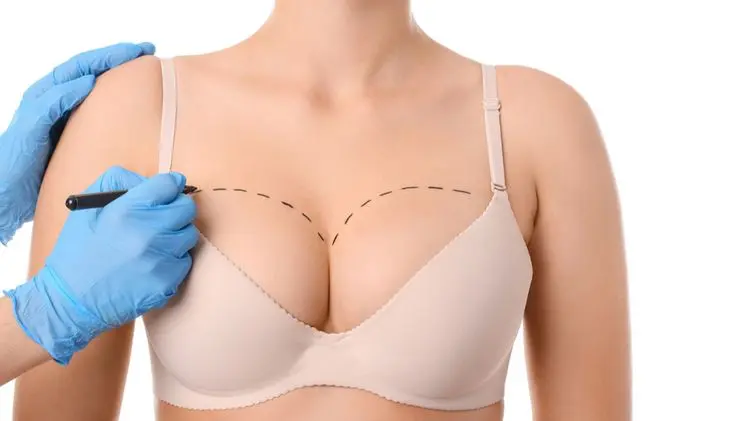
The procedure can be used to create a modest increase in breast volume, improve breast contour and address certain areas where additional fullness is desired. Because the patient’s own fat is used, there is no breast implant involved. However, the amount of enlargement that can be achieved depends on how much suitable fat is available and how much of the transferred fat survives.
How Does Breast Fat Grafting Work?
Breast fat grafting generally involves three stages: fat harvesting, fat preparation and fat transfer. First, the surgeon identifies an appropriate donor area where there is sufficient excess fat. Liposuction is then used to remove the fat through small incisions.
The collected fat is processed to separate usable fat cells from unwanted components. The purified fat is then transferred into small syringes. During the final stage, the surgeon carefully places the fat into selected areas of the breasts. Fat is generally transferred in small amounts and distributed carefully to create an even contour.
The purpose is not simply to add volume. The surgeon also considers breast shape, symmetry, proportions and the patient’s desired outcome when determining where the fat should be placed.
Who Is a Good Candidate for Breast Fat Grafting?
Breast fat grafting may be suitable for women who want a relatively modest increase in breast volume and prefer to use their own tissue rather than implants.
A suitable candidate generally needs enough excess body fat to harvest for transfer. Someone who is very lean may not have sufficient donor fat to achieve the desired result. Other factors considered during consultation may include:
• Overall health and medical history
• Stable body weight
• Amount and location of available donor fat
• Breast size and shape
• Skin quality
• Degree of breast sagging
• Previous breast surgery
• Personal expectations and aesthetic goals
People who want a very significant increase in breast size may find that implants are more appropriate because fat transfer has limitations regarding the amount of volume that can be added in one procedure.
What Are the Benefits of Breast Fat Grafting?
One of the main benefits of breast fat grafting is that it uses the patient’s own fat rather than an implant. The procedure can provide a subtle and natural looking increase in breast volume while also allowing unwanted fat to be removed from another part of the body.
For example, fat may be harvested from the abdomen or flanks, allowing the surgeon to improve the contour of the donor area while adding fullness to the breasts. Breast fat grafting may also be useful for improving certain areas of breast contour or addressing mild differences in breast size and shape. Fat transfer can be used as part of cosmetic breast enhancement as well as in selected reconstructive situations.
Another advantage is that there is no implant to rupture or replace. However, fat transfer has its own risks and limitations, so avoiding implants does not mean avoiding surgery or potential complications.
How Much Can Breast Fat Grafting Increase Breast Size?
One of the most important limitations of breast fat grafting is the amount of enlargement it can provide. Fat transfer generally produces a relatively modest increase in breast size compared with implant augmentation. The final amount of volume depends on the amount of fat available, the patient’s anatomy and how much of the transferred fat survives.
Some of the transferred fat is naturally reabsorbed by the body. Consequently, the appearance immediately after surgery does not necessarily represent the final result. Patients seeking a substantial increase in breast size may therefore need to consider other options or, in selected cases, more than one fat transfer procedure.
Breast Fat Grafting vs Breast Implants
Both breast implants and fat transfer can increase breast volume, but they work differently. Implants provide a predetermined volume and can produce a more substantial increase in breast size. Breast fat grafting uses the patient’s own fat and generally produces a more modest enhancement. Fat transfer also involves liposuction of a donor area, while implant augmentation does not require fat harvesting.
Another difference is that some of the transferred fat may not survive, while an implant provides a defined volume that does not depend on fat survival. Neither option is automatically right for every patient. The appropriate choice depends on breast anatomy, available donor fat, desired volume, skin quality and personal preferences.
Can Breast Fat Grafting Correct Sagging Breasts?
Breast fat grafting can restore some volume, but it does not generally correct significant breast sagging by itself.
Breast ptosis occurs when the breast tissue and skin have descended, often following pregnancy, breastfeeding, aging or significant changes in weight. Adding volume may improve fullness in some patients, but it does not necessarily reposition a significantly lowered nipple or remove excess skin.
A breast lift may therefore be recommended when sagging is a major concern. In selected cases, a breast lift can be combined with fat grafting to improve both breast position and volume. The appropriate approach depends on the degree of sagging and the patient’s aesthetic goals.
What Happens During the Procedure?
Before surgery, your surgeon will assess your breasts and identify suitable donor areas. The donor area is treated with liposuction to collect an appropriate amount of fat. The fat is then processed before being prepared for transfer.
The surgeon carefully injects the prepared fat into different areas of the breast to create the planned shape and volume.
The exact surgical technique varies according to the patient’s anatomy and the surgeon’s approach. The procedure may take several hours depending on the amount of fat being harvested and the complexity of the treatment. Because both liposuction and breast treatment are involved, recovery can involve discomfort and swelling in more than one area.
What Is Recovery Like After Breast Fat Grafting?
Swelling, bruising and tenderness can occur in both the breasts and the areas treated with liposuction. The donor areas may feel sore or sensitive during the early recovery period, while breast swelling gradually settles. A compression garment may be recommended for the liposuction areas, depending on the surgical plan.
Your surgeon will provide specific instructions about bathing, exercise, compression garments, breast support and returning to normal activities. Some people can return to work relatively quickly, while others need more time depending on the extent of surgery and the nature of their work. Swelling can take several weeks to settle, and the final result develops gradually. Following your surgeon’s postoperative instructions is particularly important during this period.
When Will You See the Final Results?
The breasts may initially appear fuller than they will eventually become because of postoperative swelling and the amount of fat present immediately after transfer. Some of the transferred fat is naturally absorbed by the body during the healing process. The remaining fat develops a blood supply and becomes part of the surrounding tissue.
The final result can take several months to become clear. Cleveland Clinic notes that it can take around six months for transferred fat cells to establish a new blood supply and for final results to become apparent. Individual results vary, and some patients may require additional fat transfer to achieve their desired volume.
Are Breast Fat Grafting Results Permanent?
Fat cells that successfully survive the transfer can provide long lasting volume. However, not every transferred fat cell survives. Weight changes can also affect the transferred fat. Significant weight gain or weight loss may change the size and shape of the breasts because the transferred fat remains living tissue that can respond to changes in body weight.
Maintaining a relatively stable weight can therefore help preserve the result. Natural aging will also continue after surgery, meaning that breast shape and skin elasticity can change over time.
What Are the Risks of Breast Fat Grafting?
Although breast fat grafting can be performed safely in appropriate patients, it is still a surgical procedure with potential complications. Possible risks include infection, bleeding, changes in breast sensation, asymmetry, fat necrosis, cyst formation, microcalcifications and loss of some of the transferred fat.
Fat necrosis occurs when some transferred fat cells do not survive. This can result in firm areas or lumps within the breast and may sometimes require further assessment.
Fat transfer can also produce imaging findings such as oil cysts or calcifications. These findings can generally be evaluated with appropriate breast imaging, but it is important to tell radiologists about previous breast fat grafting so that changes can be interpreted in the correct clinical context. Your surgeon should explain the risks that are relevant to your individual circumstances before surgery.
Can Breast Fat Grafting Leave Scars?
Because fat needs to be harvested and transferred, breast fat grafting involves small incision sites. The liposuction incisions are generally small, and the breast injection sites may also leave very small marks. Their eventual appearance depends on factors such as incision placement, individual healing and genetics.
Compared with procedures requiring larger breast incisions, fat transfer can involve relatively small access points. However, the absence of large scars does not mean there is no surgical healing. Your surgeon can explain where the incisions will be placed and how they should be cared for after surgery.
Is Breast Fat Grafting Right for You?
Breast fat grafting can be an appealing option for women who want a natural tissue based approach to breast enhancement and are comfortable with a relatively modest increase in volume. It can be particularly useful when a patient has sufficient donor fat and wants to improve both breast fullness and the contour of another area of the body.
However, it is not the right choice for everyone. Patients seeking a large increase in breast size, or those with significant breast sagging, may require a different approach. A consultation with a best female plastic surgeon in Dubai allows your surgeon to evaluate your anatomy, available donor fat, breast shape and goals before recommending a treatment plan.
Take the Next Step with an Expert Consultation
If you are considering breast fat grafting, an individual consultation can help you understand whether fat transfer is appropriate for your goals.
Your surgeon can assess your available donor fat, discuss the amount of breast enhancement that may realistically be achieved, explain the recovery process and compare fat grafting with other options such as implants or a breast lift. The goal is not simply to add volume. A carefully planned procedure should consider breast proportions, symmetry, body contour and your individual anatomy to create a balanced and natural looking result.